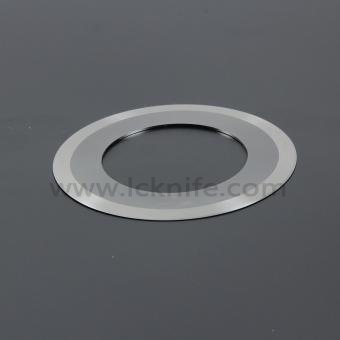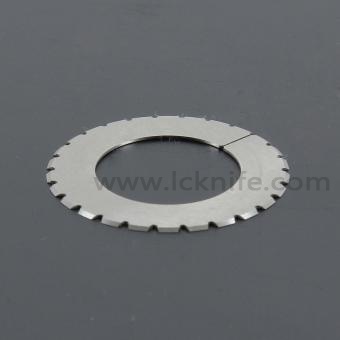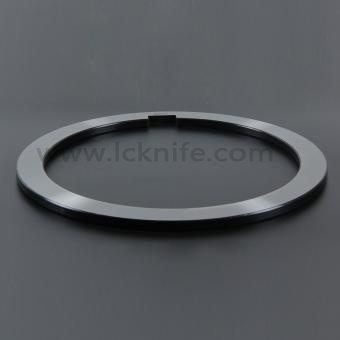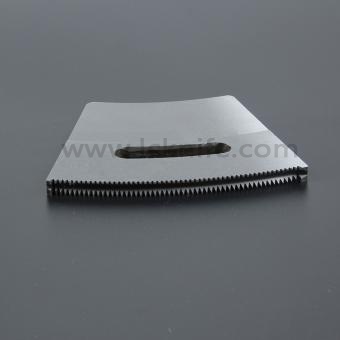
Dans l’industrie du recyclage et de la gestion des déchets, votre broyeur à arbre unique est le pilier de votre activité. Au cœur de cette machine se trouve son composant consommable le plus critique : la lame de broyeur à arbre unique (également appelée couteaux ou éléments de coupe de broyeur).
Comme ces lames traitent en permanence des matériaux abrasifs tels que les plastiques, le bois, le caoutchouc et les déchets municipaux, elles sont soumises à une usure extrême. Négliger l’entretien des lames n’émousse pas seulement vos éléments de coupe : cela augmente vos factures d’énergie, sollicite excessivement votre rotor et entraîne des arrêts imprévus coûteux.
Pour vous aider à maximiser votre retour sur investissement (ROI), nous avons préparé ce guide pratique, étape par étape, sur comment entretenir les lames de votre broyeur à arbre unique pour des performances optimales.
La prévention est toujours moins coûteuse que le remplacement. Une inspection quotidienne rapide de 5 minutes avant le début de votre poste peut vous faire économiser des milliers de dollars en réparations.
Vérifier les éclats et les fissures : recherchez toute microfissure visible ou tout bord ébréché sur les lames. Une lame ébréchée peut provoquer des forces de coupe irrégulières, imposant une contrainte inutile à l’arbre du rotor.
Identifier les boulons desserrés : l’environnement à fortes vibrations du broyage peut desserrer les boulons de fixation des lames avec le temps. Assurez-vous que tous les boulons sont serrés au couple conforme aux spécifications du fabricant.
Rechercher les accumulations de matériau : les plastiques durcis ou les fibres enroulées autour des lames peuvent chauffer le métal par friction, compromettant son traitement thermique et sa dureté.
La plupart des lames de broyeur à arbre unique modernes de haute qualité sont conçues comme des éléments de coupe carrés indexables avec quatre arêtes utilisables.
Conseil de pro : n’attendez pas qu’une arête de lame soit complètement usée ou arrondie pour la faire pivoter.
Établissez un calendrier de rotation basé sur vos heures de fonctionnement (par exemple, toutes les 150 à 200 heures de fonctionnement, selon l’abrasivité du matériau entrant). La rotation des lames au bon moment garantit une granulométrie constante, réduit la consommation d’énergie et utilise $100\%$ de l’acier à outils que vous avez payé.
L’efficacité d’un broyeur à arbre unique repose sur l’écartement précis de cisaillement entre les lames rotatives et les contre-lames fixes (lames de fond).
Le danger d’un écart trop large : si l’écart devient trop important en raison de l’usure, le broyeur commencera à déchirer et à comprimer le matériau au lieu de le couper proprement. Cela augmente considérablement la charge hydraulique ou celle du moteur.
Comment l’entretenir : mesurez régulièrement la tolérance à l’aide d’une jauge d’épaisseur. Avancez les contre-lames fixes pour rétablir le jeu optimal recommandé par votre fabricant d’équipement d’origine (généralement entre $0.5\text{ mm}$ et $1.5\text{ mm}$).
Lorsque les quatre arêtes de vos lames indexables sont usées, elles ne doivent pas nécessairement finir à la ferraille. Les aciers alliés haute qualité (tels que D2, DC53 ou Cr12MoV) peuvent souvent être rectifiés professionnellement.
Éviter la surchauffe pendant le meulage : si vous meulez les lames sur site, utilisez suffisamment de liquide de refroidissement. Une chaleur excessive pendant le meulage peut modifier la structure métallurgique de l’acier à outils, entraînant une rupture prématurée (écaillage) lors de la réinstallation.
Maintenir l'équilibre des jeux :Lors du meulage d'un jeu de lames, veillez à ce qu'elles soient meulées selon des dimensions uniformes afin de maintenir un rotor équilibré et des jeux de coupe réguliers.
Le moyen le plus rapide de détruire un jeu de lames de broyeur haut de gamme est la présence de métal parasite non protégé.
Installer des séparateurs magnétiques :Placez des aimants au-dessus des bandes ou des poulies magnétiques sur vos convoyeurs d'alimentation afin de capturer les métaux ferreux avant qu'ils n'atteignent la trémie.
Effectuer un pré-tri de la matière d'alimentation :Formez les opérateurs à repérer les épaisses plaques d'acier, les blocs de béton ou les grosses pierres cachés dans les tas de déchets en vrac.
Ma'anshan Licheng Blade Manufactory


 Réseau IPv6 pris en charge
 Analyse de wechat: