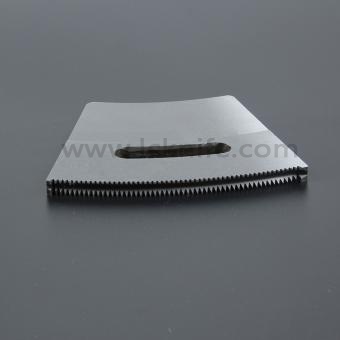
Les performances de l'acier 3Cr-H13 (à teneur en chrome réduite à 3 %) et de l'acier H13 traditionnel (à 5 % de chrome) ont été comparées. Des analyses microstructurales et de composition de phase ont été réalisées par MEB, MET et DRX afin d'étudier l'influence du chrome sur les propriétés de l'acier H13.
Les résultats indiquent que la réduction de la teneur en chrome améliore significativement la stabilité au revenu et la résistance à haute température de l'acier H13. Cette amélioration est principalement due au degré de restauration de la martensite dans la structure revenue et aux types spécifiques de précipitation de carbures secondaires. Acier H13 traditionnel : lors d'un revenu à 650 °C, la martensite subit une restauration quasi complète, entraînant une chute importante de la résistance de la matrice. De grandes quantités de carbures Cr
7C
3 et M
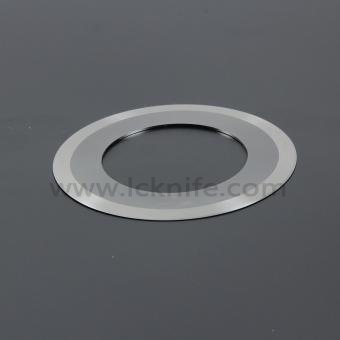
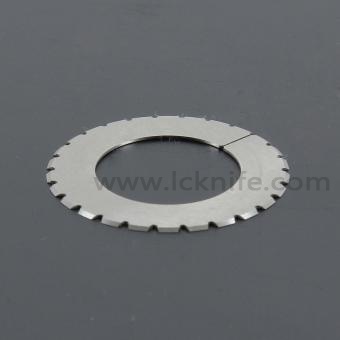
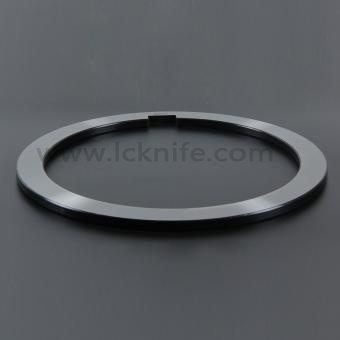
6C quasi sphériques précipitent le long des lattes martensitiques initiales et aux joints de grains, affaiblissant l'effet de durcissement par phase secondaire. Acier 3Cr-H13 : après revenu à 650 °C, la matrice conserve sa structure de martensite en lattes avec une densité de dislocations élevée. Simultanément, un volume important de carbures de vanadium (VC), fins, dispersés et en forme de bâtonnets courts, précipite à l'intérieur des lattes. Ces carbures assurent un renforcement par dispersion et bloquent les dislocations, retardant la restauration de la martensite et améliorant ainsi les performances à haute température. Ces lames sont parfaitement adaptées au cisaillement à chaud de plaques et de billettes d'épaisseur moyenne à épaisse dans les aciéries.
Couteau Licheng
Des solutions sur mesure et économiques, avec un service personnalisé et spécialisé pour chaque client !


 Réseau IPv6 pris en charge